News
SpaceX to use superalloys in Mars rocket Raptor engines, says Elon Musk

A few days after he touched upon methods of creating BFR propellant on Mars, SpaceX CEO Elon Musk mentioned in a tweet that the launch company was using cutting-edge combinations of metals (known as superalloys) to ensure the efficiency and reliability of its Raptor rocket engine, a critical requirement for BFR to enable sustainable colonization of Mars.
In response to a tweeted question about types of metal alloys currently in use at SpaceX, Musk briefly delved into the complexities of building BFR’s propulsion system, particularly with respect to alloys capable of surviving the intense conditions inside a rocket engine:
“[SpaceX is using] SX 300 & soon SX 500. Kind of a modern version of Inconel superalloys. High strength at temperature, extreme oxidation resistance. Needed for ~800 atmosphere, hot, oxygen-rich turbopump on Raptor rocket engine.” – Elon Musk
There’s a lot to break down for the layperson in Musk’s tweet. First and foremost, commenters (your author included) immediately jumped to the conclusion that “SX 300/500” referred to some sort custom SpaceX material, given that SX is a frequent shorthand for SpaceX used in the enthusiast community. In reality, it was quickly discovered that the requirements Musk described for the material – namely “high strength at temperature [&] extreme oxidation resistance” – were nearly the exact same qualities of single-crystal superalloys, extremely advanced metal formulations also notated as SC or SX. It’s quite the apt coincidence that SpaceX will apparently rely on SX alloys for critical components of BFR propulsion.

A 2017 test-firing of the mature development Raptor, roughly 50% less powerful than the full-scale system. (SpaceX)
Single-crystal superalloys employ small amounts of exotic elements in order to better ensure truly unusual crystal formation in metal structures. In the case of SX alloys, the optimal result is a monolithic metal structure that effectively has no visible grain (think wood grain but in metal) – the resulting metal would be a huge monolithic crystal, in other words, uniform down to a near-atomic level. These SX superalloys are already used regularly for industrial applications requiring the ability to reliably operate in extremely corrosive high-pressure, high-temperature environments for long periods of time, most frequently seen in gas turbines for energy generation and airplane propulsion.
Per Musk, SpaceX intends to take those alloys a step further, developing its own SX-300 and SX-500 iterations for the purpose of building a reliable, robust turbopump for the Raptor propulsion system. In pursuit of the greatest possible efficiency, Raptor’s turbopump will run oxygen-rich, meaning that the inherently imperfect combustion process will lean towards excess oxygen in the exhaust, rather than excess methane. In simple terms, this choice is partially motivated by the fact that oxygen molecules are slightly lighter than methane molecules (15.999u vs. 16.04u). More importantly, the higher the pressure in the turbopump, the higher the pressure in Raptor’s combustion chamber, which directly correlates with more efficient combustion and thus a more efficient rocket engine overall. All improvements to its subcomponents will inherently end up benefiting SpaceX’s BFR booster and spaceship, the latter of which is already nearing initial prototype construction.
-
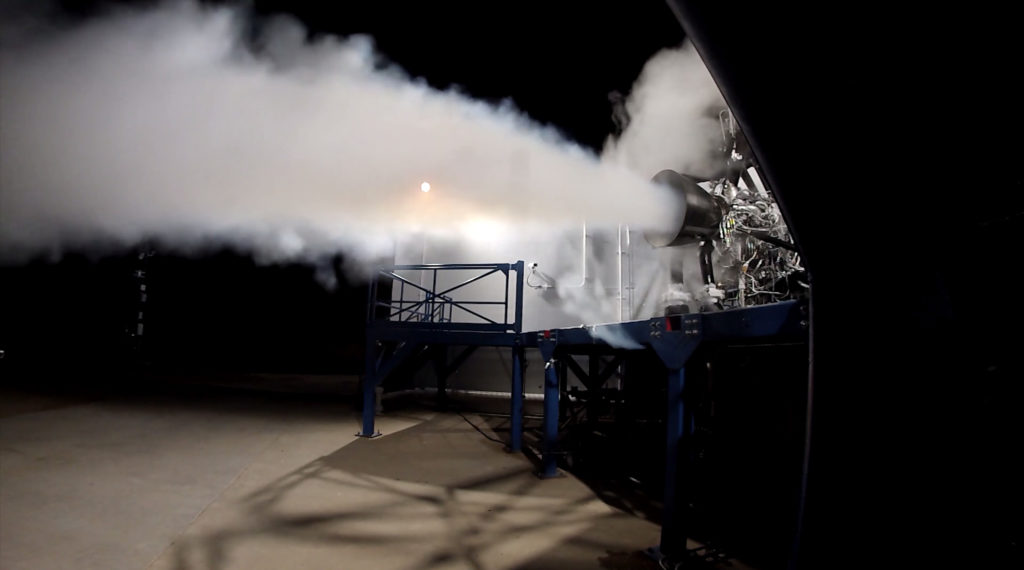
- SpaceX’s current Texas facilities feature a test stand for Raptor, the engine intended to power BFR and BFS to Mars. (SpaceX)
-
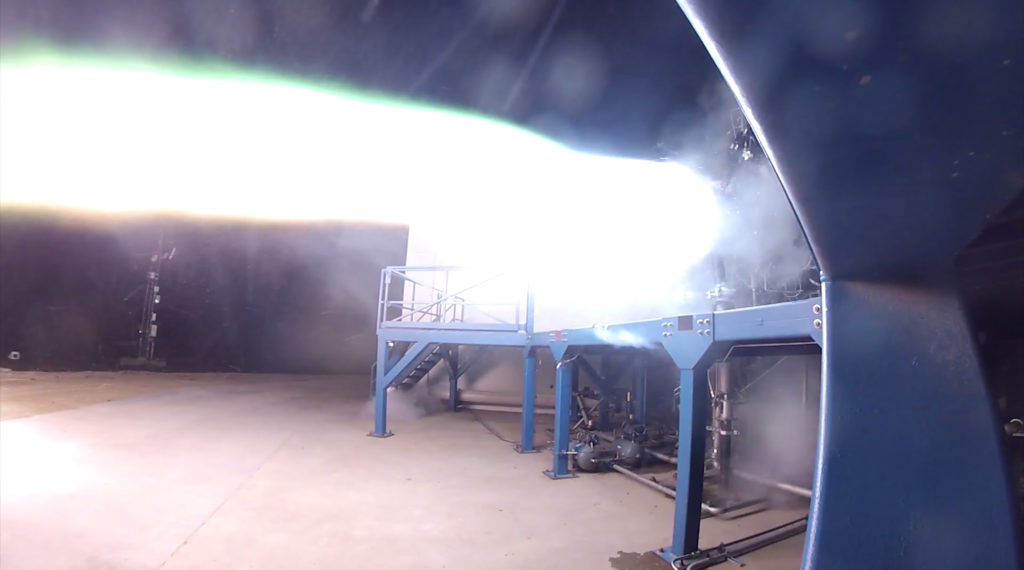
- SpaceX’s Raptor proceeds through the complex process of ignition. (SpaceX)
-
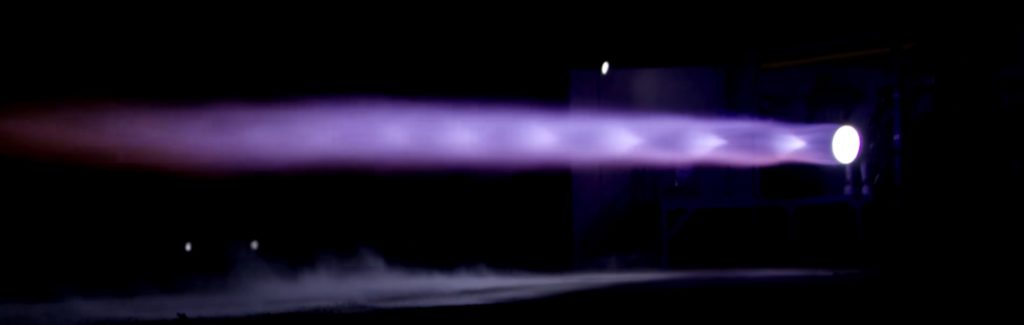
- SpaceX’s subscale Raptor engine has completed more than 1200 seconds of testing in less than two years. (SpaceX)
-
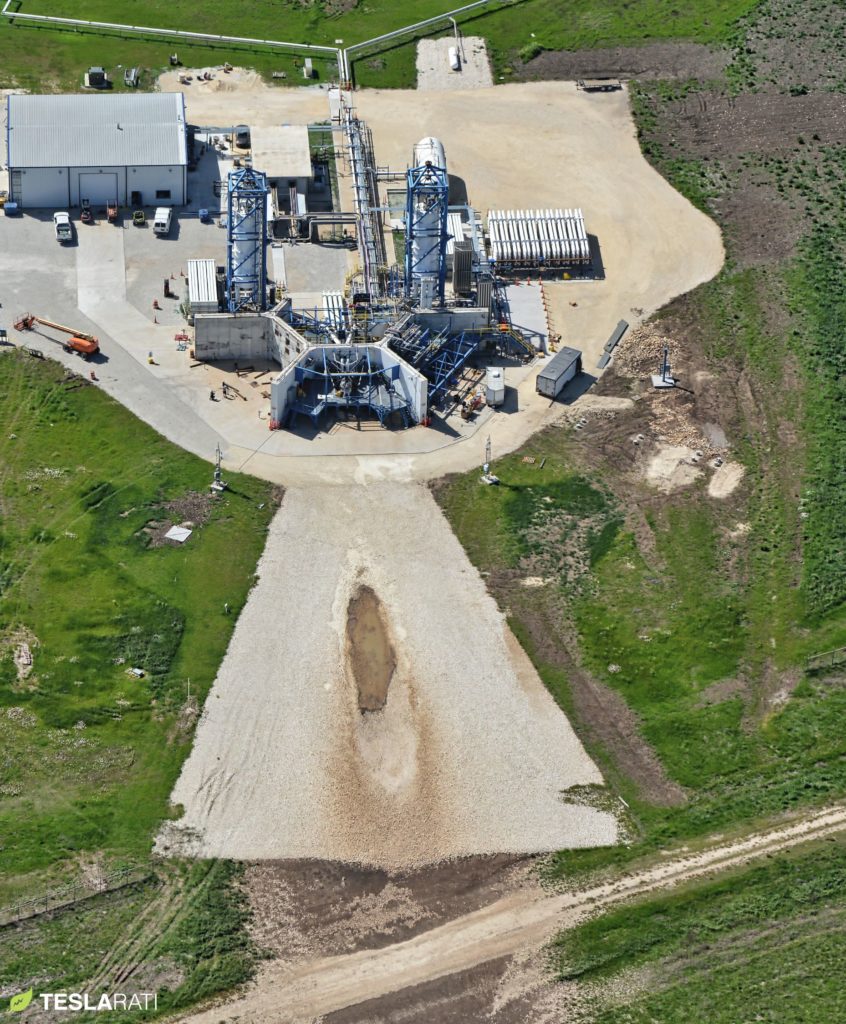
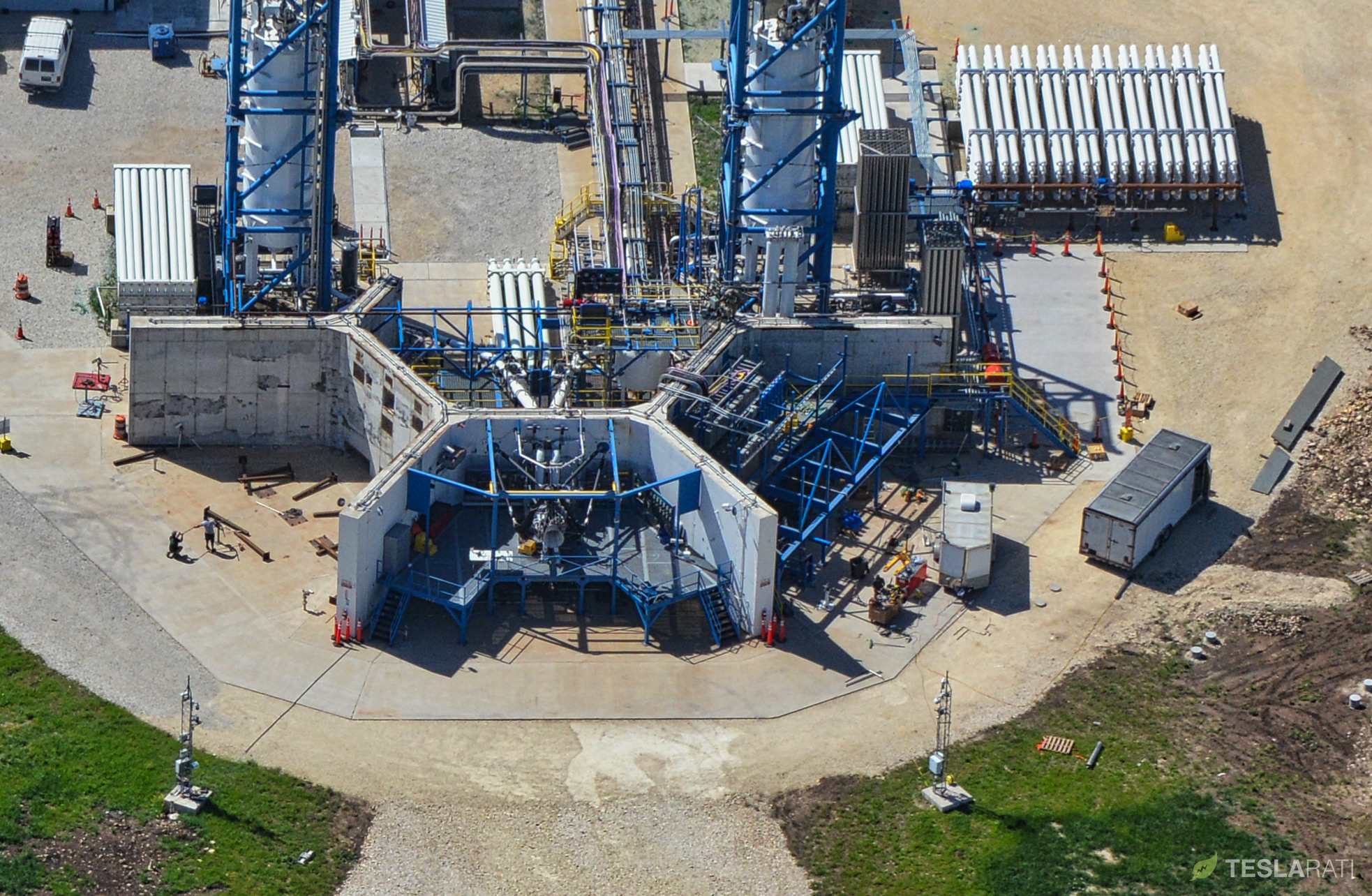
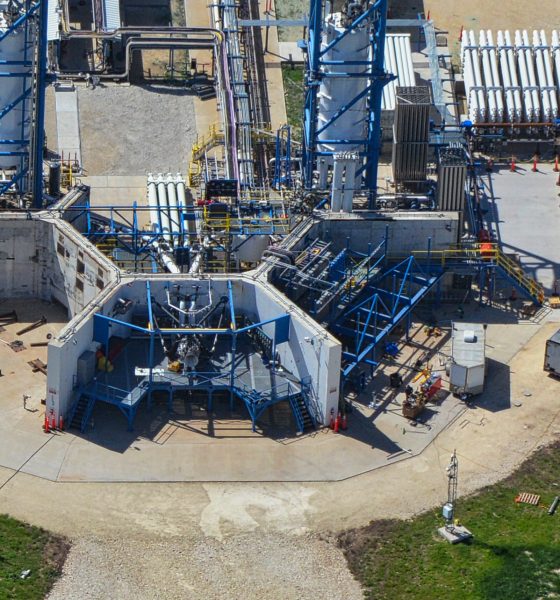
- SpaceX’s three-bay Raptor test stand as of April 17. The middle bay is currently home to the subscale Raptor test program. (Aero Photo)
While SpaceX cut its original Raptor specifications by roughly 50% compared to its 2016 goals, it appears that the company’s ambitions for the downsized Raptor are smaller in name only. In a May 2018 presentation, Chief of Propulsion Tom Mueller foreshadowed those future ambitions while humbly acknowledging that the Merlin 1D powering Falcon 9 and Heavy is already a masterpiece of engineering: “Merlin holds the thrust to weight record for now… but Raptor’s coming.”
Follow us for live updates, peeks behind the scenes, and photos from Teslarati’s East and West Coast photographers.
Teslarati – Instagram – Twitter
Tom Cross – Twitter
Pauline Acalin – Twitter
Eric Ralph – Twitter



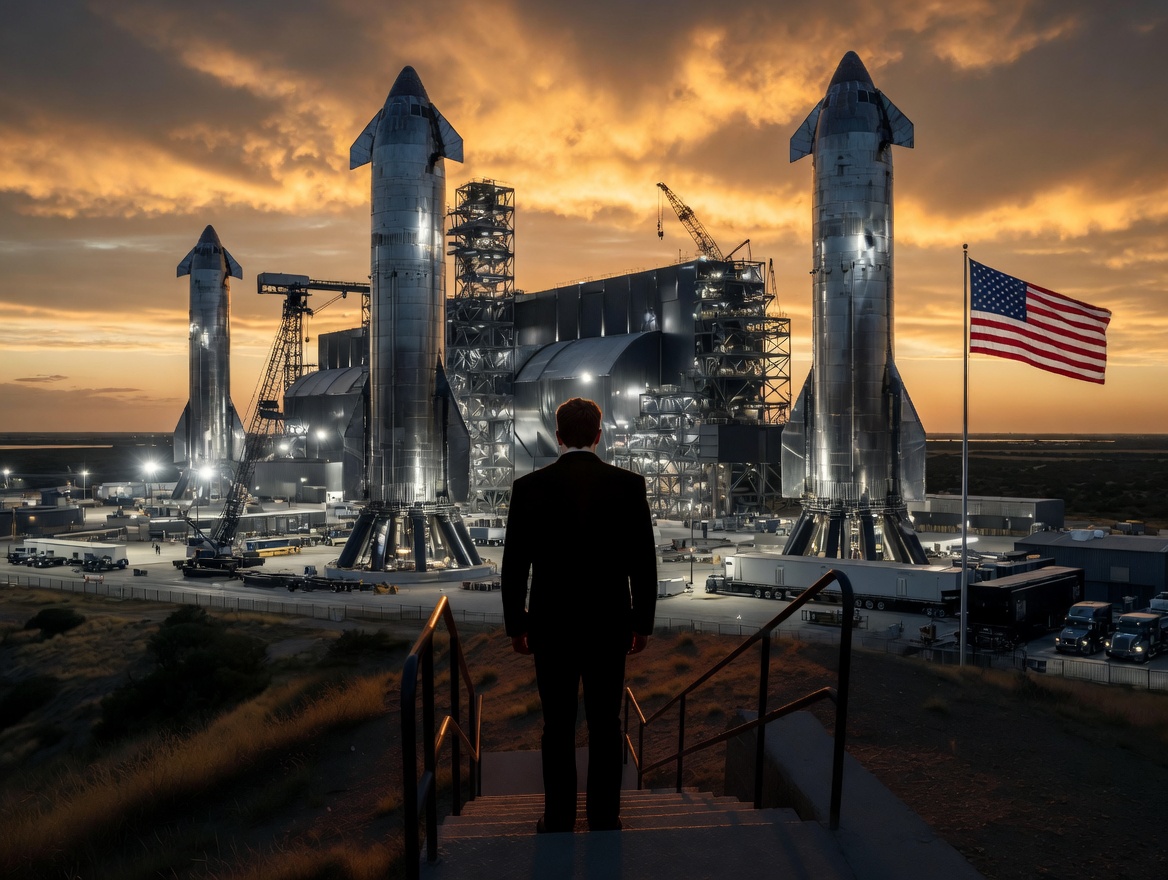
SpaceX CEO Elon Musk recently confronted worries about orbital data centers and launching satellites in mass quantities in space, as some voiced concerns about crowding.
Musk’s SpaceX plans to combat the issue of needing data centers by launching them into space instead of taking up valuable real estate on Earth. It has been a major point of SpaceX’s future, including its looming IPO, which could be the largest ever.
In a recent interview filmed at SpaceX’s Starlink terminal factory in Bastrop, Texas, Elon Musk directly addressed concerns that deploying large numbers of AI satellites for orbital data centers could crowd Earth’s orbit. His message was straightforward and reassuring: space is vast beyond human intuition.
“Space is really big,” Musk said. “It’s not like space is gonna get crowded. Space is enormous. If you actually look at it relative to the Earth, the satellites are so tiny you can’t even see them.” He emphasized that even zooming in makes a satellite appear large, but from a planetary perspective, they are minuscule specks.
Elon on concerns that AI satellites will crowd space:
“Space is really big. It’s not like space is gonna get crowded. Space is enormous. If you actually look at it relative to the earth, the satellites are so tiny you can’t even see them.” https://t.co/Mvr7NpL25Q pic.twitter.com/5Fi629Rii7
— Sawyer Merritt (@SawyerMerritt) June 8, 2026
Musk pointed to SpaceX’s real-world experience operating roughly 10,000 Starlink satellites as evidence that large constellations can be managed safely. “We’ve got a pretty good idea of how to operate just really large constellations and do it safely,” he noted. SpaceX remains the only operator with meaningful experience at this scale, giving the company unique insight into tight orbital packing without compromising safety
The discussion highlighted SpaceX’s plans for “AI1” satellites—essentially orbiting racks of AI compute powered by massive solar arrays and cooled via radiative panels in space’s vacuum.
These satellites leverage proven Starlink V3 technology, making them simpler to design than communications satellites. A first-generation unit targets around 150 kW peak power, with a 70-meter wingspan for solar panels and radiators. Laser links will connect them to each other and the Starlink network, delivering low-latency access (on the order of a few milliseconds from low-Earth orbit).
FCC accepts SpaceX filing for 1 million orbital data center plan
Musk framed orbital data centers as a practical solution to Earth’s constraints on AI growth. Ground-based facilities face power shortages, water demands for cooling, and grid limitations. In space, constant sunlight (no day-night cycle), vacuum radiative cooling, and abundant solar energy offer clear advantages.
Production will ramp up at an expanded “Gigasat” factory in Bastrop, with solar manufacturing already underway and full AI satellite output expected at reasonable volume by the end of 2027. Starship’s rapid, high-volume launch capability, aiming for multiple flights per hour, will make massive deployment feasible.
Critics sometimes raise risks like space debris or Kessler syndrome, but Musk’s response underscores scale: even a million satellites would represent an imperceptible fraction of available orbital volume when viewed against Earth’s size. SpaceX’s automated collision avoidance and deorbiting designs for Starlink further mitigate concerns.
This vision ties into broader ambitions. Musk sees orbital AI compute as a step toward harnessing more of the Sun’s energy, advancing humanity on the Kardashev scale from a Type 0 civilization toward Type 1 and eventually Type 2. By moving power-hungry data centers off-planet, SpaceX aims to unlock orders-of-magnitude more compute while preserving Earth’s resources.
Musk’s comments should ease public anxiety. With proven operational expertise, incremental engineering, and the immensity of space itself, orbital data centers represent not overcrowding, but smart expansion into the final frontier.
Tesla Full Self-Driving (Supervised) is currently listed as a Level 2 suite in terms of its passenger cars. As its Robotaxi platform continues to move quickly, it has been recognized as a Level 4 ride-sharing program by the State of Texas, as Tesla recently self-certified itself.
However, a Wall Street analyst is arguing that Tesla (NASDAQ: TSLA) has effectively achieved Level 4 autonomy in most conditions in all of its vehicles, drawing on personal experience and data released by the company.
Alex Potter of Piper Sandler said in a note to investors on Wednesday that “Tesla has solved the self-driving puzzle,” pointing to decisions to offer insurance discounts for FSD-enabled policies as a signal of confidence, which is backed up by stellar safety records compared to human driving.
Investing.com initially reported on Potter’s new note.
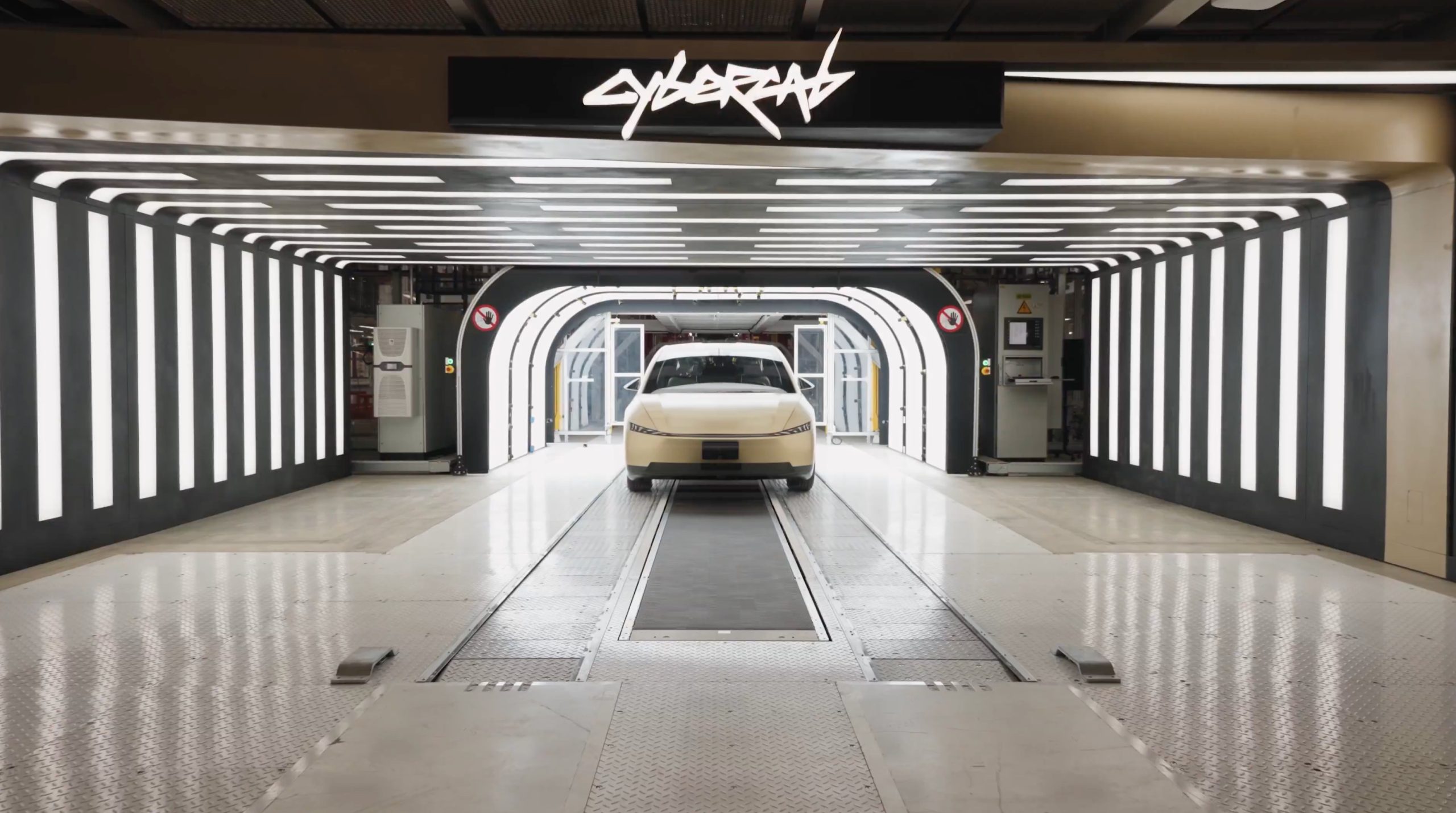
Additionally, Potter looks at the recent start of Cybercab production at Giga Texas as a potential indication that Tesla is ready to offer some level of unsupervised driving at least in the near future. The Cybercab has no steering wheel or pedals, completely eliminating the ability for human input.
He also sees Tesla’s allocation of “several hundred million USD (if not $1B+)” as confidence internally, seeing as it would be tough to set aside that amount of capital toward a project that the company does not see as relatively near-term.
Forward thinking, especially as Cybercab has no human controls, it would make sense that Tesla is at least close to self-driving. How close is another question.
Tesla has routinely teased that unsupervised FSD is close, but there are still a lot of things it feels as if the company has to roll out some more capability, including unsupervised parking features, known as “Banish,” better operation with regional self-driving performance, and other improvements.
That is not to say that Tesla FSD is super impressive already. It has already completed coast-to-coast drives across the United States and Canada, it routinely takes the stress out of driving for most people, and it has proven through Tesla Safety Reports that it is safer and involved in accidents less frequently than humans.
🚨 These are the first-ever FSD safety statistics out of the Netherlands, showing it was over 3.5x safer than human driving on Dutch roads.
The most recent numbers out of Tesla for North America show:
-Over 5.5 million miles between accidents for Teslas using FSD
-660k miles… https://t.co/XKlRzgSGEh pic.twitter.com/HX6kzh0ZKc— TESLARATI (@Teslarati) June 9, 2026
Even Potter believes it is capable, as he used it to go from Missoula, Montana, to Minneapolis, Minnesota, back in April.
“There’s no substitute for personal experience,” he wrote.
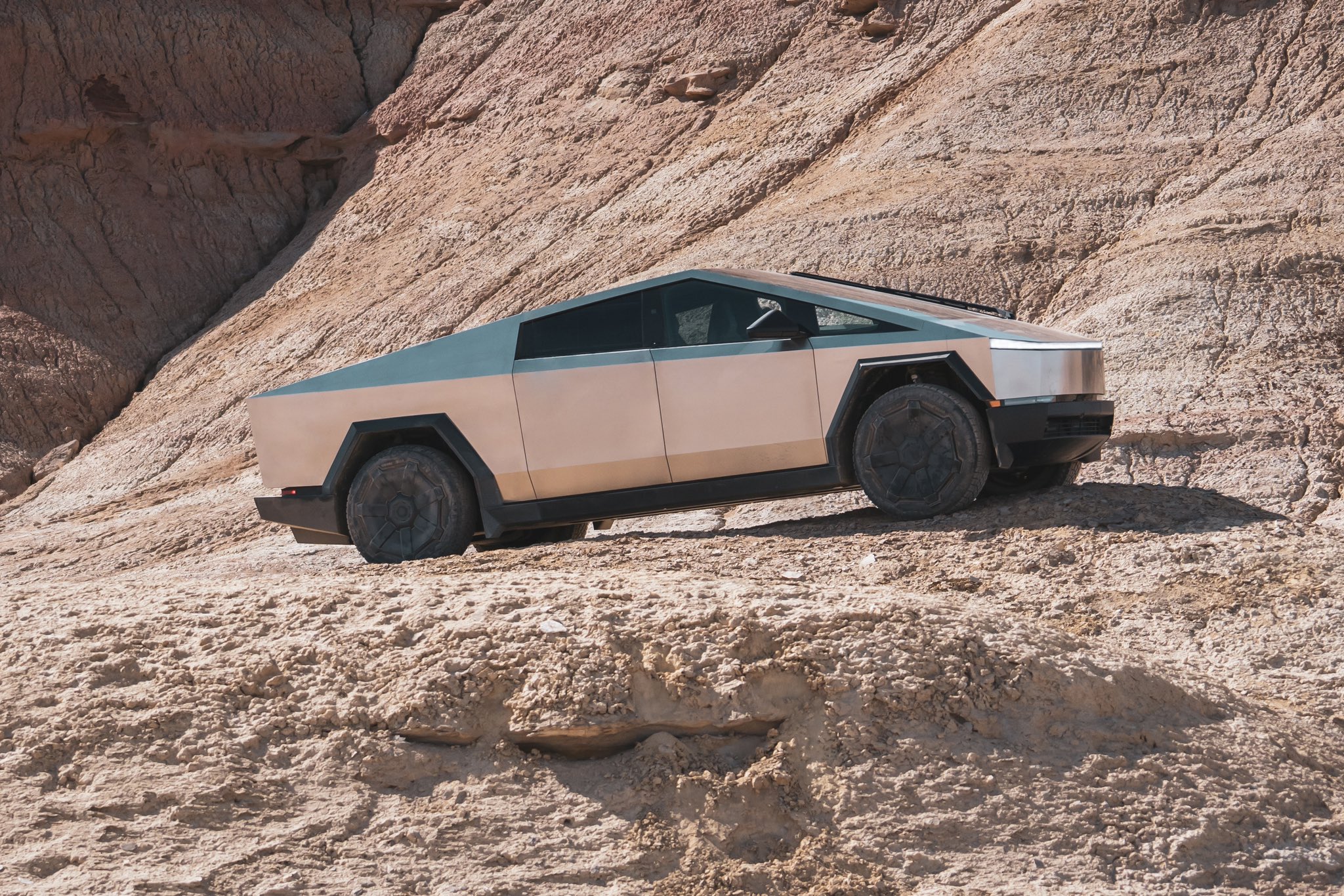
Tesla has finally and officially confirmed that Actually Smart Summon, commonly known as ASS, will make its way to the Cybertruck two and a half years after first deliveries.
The feature, which is part of the Full Self-Driving suite, allows owners of any Tesla to literally summon their vehicle to their location in a parking lot. It is limited by range and speed, especially as there is nobody in the vehicle, but is a great feature to have for rainstorms, busy parking lots, or for injured passengers (I recently used it so I could give my Fiancèe a hand leaving a sports injury doctor after she pulled her calf).
Tesla Summon has been a lifesaver for picking up my Fiancèe as she pulled her calf during a 10-mile race in Philadelphia this past weekend!
It went from one of her least favorite features of the Tesla to one of the most useful:pic.twitter.com/CPs6lTSPA8
— TESLARATI (@Teslarati) May 6, 2026
Summon has been available on every Tesla that is currently available, but the Cybertruck has not had the feature in the two and a half years that customers have been taking deliveries.
There were a few things that Tesla had to work out with Full Self-Driving features, Summon in particular, with the Cybertruck.
Initially, its Steer-by-Wire system handles low-speed maneuvers differently than a typical mechanical steering connection available in the S3XY lineup. This required some additional time of development to allow Tesla to retrain and validate the AI models specifically for the feature within Cybertruck.
Additionally, the overall size and weight of Cybertruck impacted expected dynamics, has an impact on braking distances, and even obstacle avoidance in tighter lots. Tesla prioritized safety over launching the feature ahead of having the utmost confidence in it.
However, the wait is finally over, at least it seems that way. Tesla said that Cybertruck will receive ASS through a Software Update “shortly,” but did not give an explicit date. Tesla has said that Summon is coming in the past, only for it to be delayed yet again.
Summon for Cybertruck rolling out shortly https://t.co/rGli2iHbtL
— Tesla (@Tesla) June 10, 2026
We anticipate that Summon will roll out within the Cybertruck in less than a week, but there are still some reservations about that timing because, ultimately, nobody knows what Tesla will do outside of Tesla. The Spring Update for many came well late, at least a month past the initial rollout wave.
The rollout of Summon to Cybertruck is a great milestone for Tesla, even if it has come later than most would really like to admit. Now that Cybertrucks will be summoned across parking lots, it will be awesome to see reactions to the massive pickup with no driver sitting in the driver’s seat.

SpaceX’s Elon Musk relieves worries about orbital data centers

Tesla Full Self-Driving hits Level 4? One analyst says yes


